
RBI Repo Rate 2026 and Its Impact on the Real Estate Sector
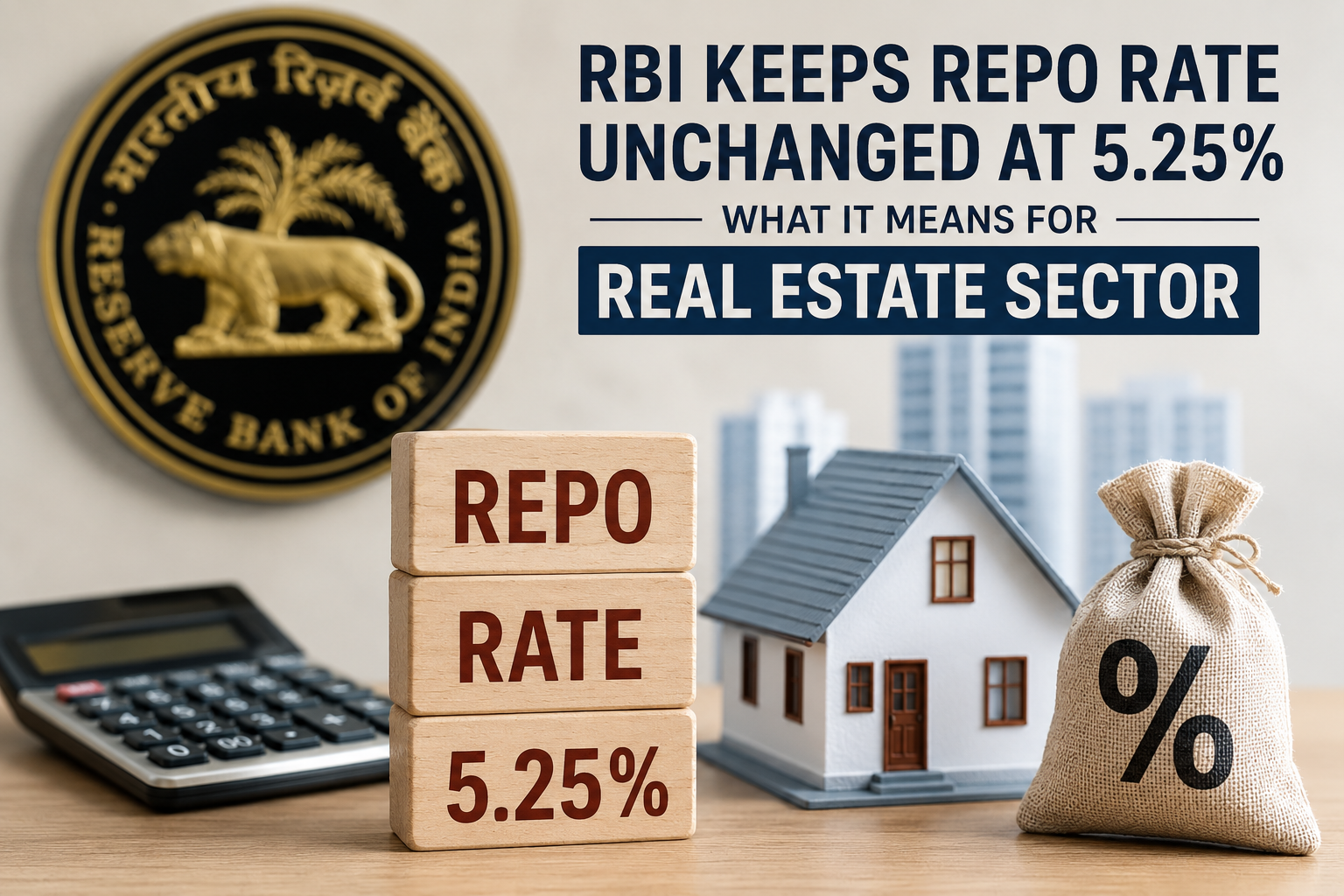
RBI Repo Rate 2026 has become one of the most discussed topics among homebuyers, real estate investors, and developers after the Reserve Bank of India decided to keep the repo rate unchanged at 5.25%. The decision comes at a time when inflation has eased significantly, touching 3.48%, comfortably below the RBI’s target of 4%. This move is expected to bring stability to the housing finance sector and provide confidence to homebuyers, developers, and real estate investors across India.
For the Indian real estate sector, interest rate stability is often more important than aggressive rate cuts. With borrowing costs remaining predictable, both residential and commercial property markets can continue their growth momentum.
How Does the Repo Rate Impact Real Estate?
The repo rate is the interest rate at which the RBI lends money to commercial banks. When the repo rate remains stable:
- Home loan interest rates are less likely to increase.
- Existing borrowers can continue with their current EMIs.
- New homebuyers get greater confidence in long-term financial planning.
- Real estate developers can plan projects with predictable financing costs.
- Housing demand remains strong due to affordability.
What This Means for Homebuyers
1. Stable Home Loan EMIs
One of the biggest advantages of the RBI’s decision is that home loan borrowers are unlikely to witness any immediate increase in EMIs. This is particularly beneficial for first-time homebuyers and middle-income families planning property purchases in 2026.
2. Improved Housing Affordability
With home loan rates remaining steady, buyers can evaluate larger properties or premium residential projects without worrying about sudden increases in financing costs.
3. Encouragement for Delayed Buyers
Many prospective buyers who were waiting for interest rate clarity may now move forward with their property purchase decisions, boosting housing demand across metropolitan cities and emerging growth corridors.
Impact on Real Estate Developers
For developers, a stable interest rate environment creates better business predictability.
Key Benefits Include:
- Easier project financing
- Improved customer sentiment
- Better sales conversion rates
- Increased investor confidence
- Improved cash flow management
Developers launching premium housing, luxury apartments, affordable housing projects, and plotted developments are likely to benefit from the RBI’s accommodative approach.
Impact on Real Estate Investors
Property investors often monitor interest rates closely before making investment decisions.
The current status quo offers:
Better Investment Planning
Stable interest rates allow investors to calculate returns more accurately and assess rental yields without unexpected financing cost shocks.
Attractive Alternative to Volatile Assets
With stock markets facing global uncertainties and inflation concerns, real estate continues to remain a preferred long-term wealth creation asset for many Indian investors.
Commercial Real Estate Opportunities
Office spaces, warehousing, logistics parks, and retail assets may continue attracting institutional and retail investors due to financing stability.
Real Estate Outlook for 2026
The Indian real estate sector enters the second half of 2026 with several favorable factors:
- Stable interest rates
- Controlled inflation
- Growing urbanization
- Rising housing demand
- Infrastructure-led development
- Increased NRI investments
While global uncertainties such as crude oil prices and geopolitical tensions remain concerns, the RBI’s decision reflects confidence in the Indian economy’s resilience.
Should You Buy Property Now?
For genuine homebuyers, the answer is increasingly becoming “Yes.”
The combination of:
- Stable home loan rates,
- Predictable EMIs,
- Growing infrastructure,
- Strong residential demand, and
- Positive long-term economic fundamentals
makes this an opportune time to evaluate property purchases, especially in high-growth markets such as Ahmedabad, Gandhinagar, Pune, Hyderabad, Bengaluru, NCR, and Mumbai.
Conclusion
The RBI’s decision to keep the repo rate unchanged at 5.25% is a welcome development for India’s real estate sector. It ensures stability for borrowers, confidence for developers, and attractive opportunities for investors. As housing demand continues to rise and infrastructure investments accelerate, the Indian property market appears well-positioned for sustained growth in 2026 and beyond.



Join The Discussion