
Introduction
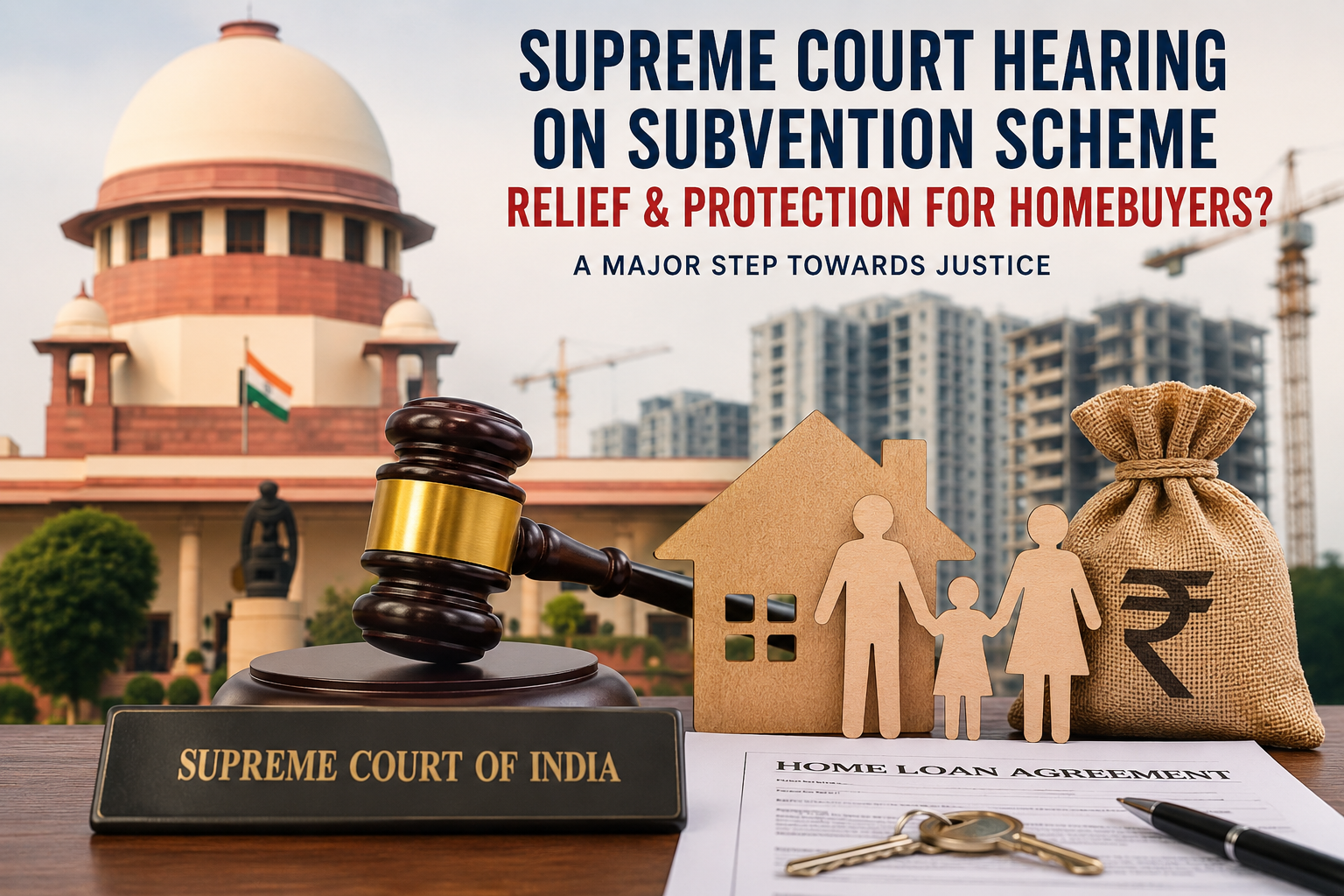
In a significant development for India’s real estate sector, the Supreme Court has agreed to hear a plea seeking stronger protection for homebuyers affected by delayed possession under subvention schemes. The petition seeks a framework whereby both builders and lenders share losses if promised homes are not delivered, rather than placing the entire financial burden on homebuyers.
As a Real Estate and Legal Expert, I believe this case could become one of the most important judgments for consumer protection in the Indian housing market.
What is a Subvention Scheme?
Under a subvention scheme:
• The bank disburses the home loan directly to the builder.
• The builder commits to paying EMIs until possession.
• The homebuyer starts repayment after receiving possession.
These schemes were widely marketed as “No EMI Till Possession” offers.
However, when projects get delayed, many builders stop servicing the EMIs, leaving homebuyers liable for loans despite not receiving possession of their homes.
Why Has the Supreme Court Intervened?
The plea before the Supreme Court seeks:
✔ Equal accountability of builders and lenders.
✔ Protection from EMI burden when possession is delayed.
✔ Structured debt-relief mechanisms for affected homebuyers.
✔ Stronger regulatory oversight over subvention-based financing models.
The Court has sought the Centre’s response, indicating serious consideration of systemic reforms.
The Biggest Risk in Subvention Schemes
Many homebuyers assumed that banks had independently verified the project’s viability.
In reality, if the builder defaults and the project stalls:
• Homebuyers face EMI demands.
• Credit scores may get impacted.
• Recovery proceedings may begin.
• Possession remains uncertain.
Several judicial proceedings over the years have highlighted concerns regarding builder-bank arrangements and their impact on homebuyers.
Legal Lessons for Property Buyers
Before investing in any under-construction project:
1. Verify RERA Registration
Check project registration, timelines, and litigation history.
2. Review Loan Structure Carefully
Understand who bears EMI liability in case of delay.
3. Read Builder-Bank Agreements
Never rely solely on marketing brochures.
4. Conduct Independent Legal Due Diligence
Obtain a title search report and verify approvals.
5. Check Builder Track Record
Past delivery performance often predicts future execution capability.
Impact on the Real Estate Industry
If the Supreme Court ultimately directs equal liability for builders and lenders:
• Homebuyer confidence may improve.
• Lending standards may become stricter.
• Developers may face greater accountability.
• Risk-sharing mechanisms may evolve across the housing finance industry.
The decision could reshape the future of project financing and consumer protection in Indian real estate.
Expert Opinion:
The era of transferring all project risk to homebuyers is being increasingly questioned by courts and regulators. Property buyers should remember one principle:
“Never invest solely based on a payment plan. Invest based on legal due diligence, project execution capability, and regulatory compliance.”
The Supreme Court’s ongoing scrutiny of subvention schemes sends a strong message that accountability in real estate transactions must be shared fairly among all stakeholders.
Conclusion
This case has the potential to become a landmark judgment for homebuyer protection in India. Whether you are purchasing your first home or investing in real estate, understanding the legal structure of your transaction is just as important as evaluating location and pricing.
A well-informed buyer is always the safest investor.


Join The Discussion