
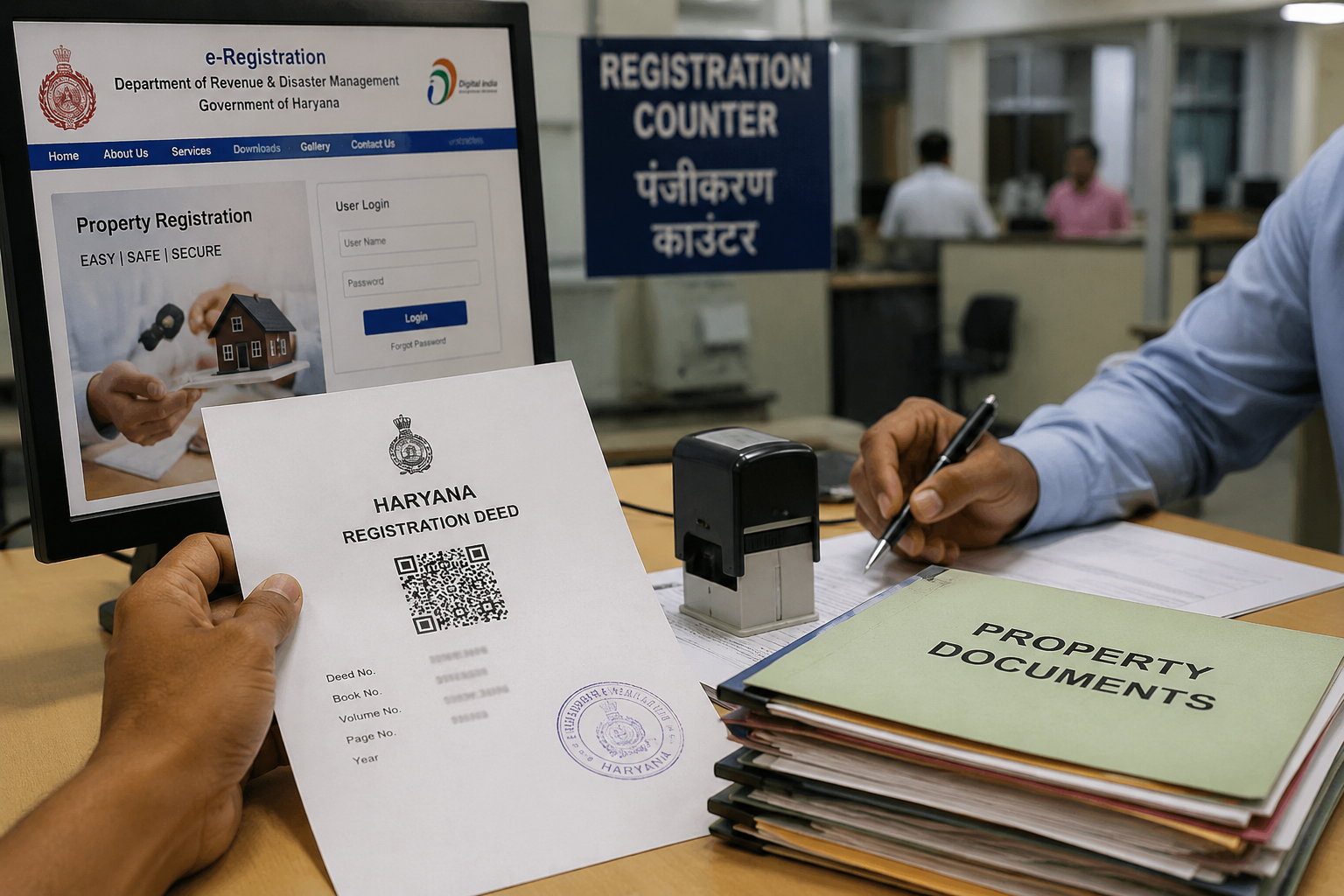
Haryana Property Registration Rules 2026 usher in a new era of digital property registration
Haryana Property Registration Rules 2026 mark one of the biggest digital reforms in the state’s real estate sector. The government has introduced mandatory Aadhaar-based e-KYC, biometric verification, digital signatures, QR-coded registration documents, online verification of certain approvals, and a more streamlined registration process. The objective is to reduce fraud, improve transparency, and make property registration faster and more reliable for buyers, sellers, financial institutions, and government authorities.
For anyone planning to buy, sell, mortgage, or inherit property in Haryana, these reforms are likely to change the registration experience and strengthen confidence in land records.
Key Highlights
| Reform | Benefit |
|---|---|
| Aadhaar e-KYC | Identity verification of parties |
| Biometric Authentication | Helps reduce impersonation |
| Digital Signatures | Paperless execution |
| QR Code on Registry | Instant authenticity verification |
| Online NOC Verification | Reduced paperwork |
| Online Tracking | Greater transparency |
| Digital Document Upload | Faster processing |
| Enhanced Scrutiny | Better fraud prevention |
What Has Changed?
The updated registration framework introduces multiple digital safeguards that work together during the registration process:
- Aadhaar-based e-KYC for the parties involved.
- Biometric verification to confirm identity.
- Digital signatures on registration documents.
- QR codes on registered documents for authenticity checks.
- Digital upload of supporting documents.
- Online verification of certain No Objection Certificates (NOCs).
- Online application tracking.
- Random scrutiny of selected registrations by senior revenue officers.
The reforms are part of Haryana’s broader effort to digitize land administration and improve public service delivery.
Why These Reforms Matter
Property fraud remains a concern in many parts of India. Common issues include:
- Fake sale deeds
- Identity fraud
- Forged ownership documents
- Multiple sales of the same property
- Delays in verification
- Manual paperwork
- Lack of transparency
Digital verification mechanisms are intended to reduce these risks by strengthening identity checks and improving document traceability.
Benefits for Property Buyers
Homebuyers may benefit from:
- Greater confidence in document authenticity.
- Improved identity verification of transaction parties.
- Faster processing in many cases.
- Better transparency during registration.
- Easier access to digitally verified records.
However, buyers should still carry out independent legal and technical due diligence before purchasing any property.
Benefits for Property Sellers
Sellers may experience:
- Reduced paperwork.
- Faster digital processing.
- Easier document management.
- Improved buyer confidence.
- Better protection against impersonation.
Impact on Banks & Housing Finance Companies
Banks and housing finance companies depend heavily on authentic property documents before sanctioning loans.
QR-coded documents and stronger identity verification may improve document verification processes and help reduce risks associated with fraudulent documentation.
Old System vs New Digital Registration
| Earlier Process | New System |
|---|---|
| Manual identity verification | Aadhaar e-KYC |
| Physical signatures | Digital signatures |
| Manual document checks | QR code verification |
| Physical NOCs | Online verification for certain approvals |
| More paperwork | Digital document upload |
| Limited tracking | Online application tracking |
Property Due Diligence Remains Essential
Even with digital registration, buyers should verify:
- Ownership records
- Chain of title
- Encumbrance Certificate
- Approved building plans
- Occupancy Certificate (where applicable)
- Property tax dues
- Society No Dues Certificate (for apartments)
- RERA registration (if applicable)
- Pending litigation
- Mortgage status
Technology can strengthen the registration process, but it does not replace legal due diligence.
What This Means for NRIs
NRIs often face practical challenges when purchasing property in India.
The expanded use of digital processes, document uploads, and online verification can make transactions more convenient, although specific procedural requirements may still depend on the nature of the transaction and applicable laws.
Expert View
The Haryana reforms reflect a broader trend toward digitization of land administration. By combining Aadhaar-based e-KYC, biometric authentication, digital signatures, QR-coded registry documents, and online verification, the state aims to improve transparency while reducing opportunities for fraud. As more states modernize registration systems, buyers and sellers can expect increasing use of technology throughout the property transaction lifecycle.
Frequently Asked Questions
What are the Haryana Property Registration Rules 2026?
The reforms introduce mandatory Aadhaar e-KYC, biometric verification, digital signatures, QR-coded registry documents, online verification of certain approvals, and simplified digital registration processes.
Is Aadhaar e-KYC compulsory?
According to the reported reforms, Aadhaar-based e-KYC has been made mandatory for property registrations in Haryana.
Why are QR codes added to registry documents?
QR codes enable quick verification of the authenticity of registered documents through the digital system.
Does digital registration eliminate legal verification?
No. Buyers should continue to conduct legal, technical, and financial due diligence before completing a property purchase.
Key Takeaways
- Haryana has significantly modernized its property registration process through digital reforms.
- Aadhaar e-KYC, biometrics, digital signatures, and QR-coded registry documents are central features of the new framework.
- The changes aim to improve transparency, reduce fraud, and streamline registrations.
- Buyers, sellers, banks, and developers should familiarize themselves with the updated requirements.
- Despite technological improvements, independent legal due diligence remains essential before purchasing any property.



Join The Discussion